
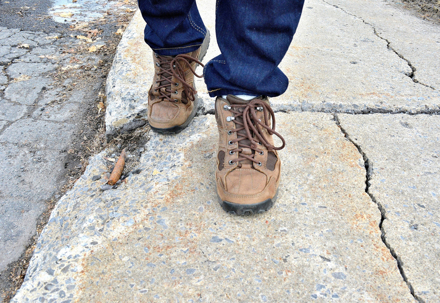
Understanding When a Fall Becomes a Legal Claim
Not every sidewalk trip-and-fall leads to a valid legal claim in California. To establish premises liability, the injured person must show that a dangerous condition existed and that a property owner or responsible party failed to take reasonable steps to address it.
Sidewalks may appear simple, but they are often the responsibility of municipalities, private property owners, or adjacent businesses, depending on location and maintenance agreements.
A case becomes legally actionable when the hazard is not just present, but also foreseeable and preventable.
Common Conditions That Lead to Sidewalk Injuries
Trip-and-fall incidents on sidewalks often involve hazards such as:
- Uneven pavement or raised slabs
- Cracked concrete or broken surfaces
- Tree root damage
- Poor lighting near walkways
- Construction-related obstructions
- Lack of proper warnings or barriers
In California, liability often depends on whether the dangerous condition existed long enough to have been addressed through reasonable inspection and maintenance.
The Role of Notice in Premises Liability Cases
A key issue in sidewalk trip-and-fall claims is notice. Property owners or responsible entities may be liable if they knew—or should have known—about the hazard.
There are two types of notice:
- Actual notice: The owner was directly aware of the condition
- Constructive notice: The condition existed long enough that it should have been discovered
For example, a sidewalk crack that has existed for months without repair may support a claim that the hazard should have been identified and corrected.
Shared Responsibility in Sidewalk Cases
California law sometimes involves shared responsibility for sidewalk maintenance. Depending on the location, responsibility may fall on:
- City or municipal agencies
- Adjacent commercial property owners
- Private homeowners in certain zones
- Contractors responsible for repairs or construction
Determining who is responsible often requires reviewing local ordinances and property records.
Why Evidence Matters in These Cases
Sidewalk trip-and-fall cases often depend heavily on documentation, including:
- Photos of the hazard
- Witness statements
- Surveillance footage
- Maintenance records
- Prior complaints or reports
Because conditions can be repaired quickly after an incident, early documentation is often critical.
Premises Liability Lawyers in Southern California
A sidewalk trip-and-fall case in California becomes legally actionable when a hazardous condition exists, is foreseeable, and was not properly addressed. These cases require careful analysis of responsibility and timing.
If you were injured due to unsafe sidewalk conditions, understanding your rights is an important first step.
Contact Carpenter & Zuckerman at (888) 484-2033 to discuss your situation and learn more about your legal options.